Integrating Material Circularity and Green Logistics Indicators in Supply Chain Performance Measurement Using the Green SCOR Model

Downloads
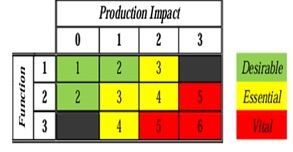
Integrating environmental considerations into supply chain performance measurement has become increasingly critical, growing sustainability and corporate responsibility. In the textile industry, particularly the non-woven sector, complex activities and mounting environmental pressures underscore the need for sustainability-oriented evaluation. The company lacks a supply chain performance measurement system that considers environmental aspects, creating a research gap that this study addresses. This study evaluates supply chain performance by embedding environmental dimensions into the measurement framework. The research was conducted in four stages: (1) identifying indicators through the Content Validity Index; (2) weighting indicators using the Analytic Hierarchy Process; (3) assessing performance with the Objective Matrix; and (4) classifying priorities through the Traffic Light System. A total of 22 validated indicators were applied, including three green indicators: Recycled Material Usage, Reusable Material, and Truck Load Optimization Rate. Recycled Material Usage was introduced as a novel indicator and validated as contextually significant for industrial supply chains. Results show a 2024 performance score of 5.678, classified as yellow under the Traffic Light System with five indicators as critical priorities for improvement. This study provides a regular monitoring tool that enables managers to establish a sustainable supply chain.
Alina Cynthia Dewi, Industrial Engineering, Universitas Pembangunan Nasional Veteran Jakarta
 is a lecturer in the Industrial Engineering Bachelor’s Program at Universitas Pembangunan Nasional Veteran Jakarta with expertise in green supply chain, procurement, decision-making analysis, and sustainability, and is also certified as a Certified Supply Chain Analyst (CSCA).
The Author Contribution is: Conceptualization, Methodology, Investigation Resources, Writing – Original Draft, Review & Editing, Visualization, Supervision, Funding Acquisition
Winni Kristianes, Industrial Engineering, Universitas Pembangunan Nasional Veteran Jakarta
 is a graduate of the Industrial Engineering Bachelor’s Program at Universitas Pembangunan Nasional Veteran Jakarta with interests in industrial management, supply chain management, and data analyst. She currently works as a Demand and Supply Planner at PT Bumi Berkah Boga (Kopi Kenangan).
The Author Contribution is: Conceptualization, Validation, Formal Analysis, Investigation Resources, DataCuration, Writing – Original Draft, Visualization.
Mohammad Rachman Waluyo, Industrial Engineering, Universitas Pembangunan Nasional Veteran Jakarta
 is a lecturer in the Industrial Engineering Bachelor’s Program at Universitas Pembangunan Nasional Veteran Jakarta with expertise in engineering management, multivariate statistics, marketing, and is also certified as a Six Sigma Green Belt professional.
The Author Contribution is: Validation, Formal Analysis, Investigation Resources, Writing – Review & Editing, Visualization, Supervision.
Nurfajriah, Industrial Engineering, Universitas Pembangunan Nasional Veteran Jakarta
 is the Head of the Industrial Engineering Bachelor’s Program at Universitas Pembangunan Nasional Veteran Jakarta with expertise in fatigue and maritime safety, and is also certified as a Six Sigma Green Belt professional.
The Author Contribution is: Validation, Formal Analysis, Writing – Review & Editing, Visualization.
Downloads
[1] E. Gonzalez-Pascual, J. Nosedal-Sanchez, and J. Garcia-Gutierrez, “Performance evaluation of a road freight transportation company through SCOR metrics,” Case Studies on Transport Policy, vol. 9, no. 4, pp. 1431–1439, 2021. https://doi.org/10.1016/j.cstp.2021.07.001.
[2] G. Sipho, S. Damanik, W. R. Saputra, V. M. Mafaza, E. E. Nicholas, and M. Afrad, “Analisis rantai pasok produksi industri jeans di Pemalang menggunakan metode SCOR,” Jurnal Mahasiswa Teknik Informatika, vol. 9, no. 1, 2025.
[3] S. Chopra and P. Meindl, Supply Chain Management: Strategy, Planning, and Operation. Pearson, 2016.
[4] R. Akmal, Perancangan dan Pengukuran Kinerja Rantai Pasok dengan Metode SCOR dan AHP di PT. BSI Indonesia, 2018.
[5] N. R. Sangwa and K. S. Sangwan, “Development of an integrated performance measurement framework for lean organizations,” Journal of Manufacturing Technology Management, vol. 29, 2017. https://doi.org/10.1108/JMTM-06-2017-0098.
[6] Supply Chain Council, Supply Chain Operations Reference Model. The Supply Chain Council, 2012.
[7] M. Flodensa, N. K. Purnawati, and P. Y. Setiawan, “Analysis of Green Supply Chain Management Performance Using the Green SCOR Method at XYZ Business,” IRJEMS, vol. 3, no. 8, 2024. https://doi.org/10.56472/25835238/IRJEMS-V3I8P114.
[8] A. Putridewi, R. Rizal, and S. Sari, “Performance analysis of the cement industry based on green supply chain management,” E3S Web of Conferences, vol. 328, p. 08001, 2021.
[9] Q. Qurtubi, R. Yanti, and M. F. N. Maghfiroh, “Supply chain performance measurement on small medium enterprise garment industry: Application of supply chain operation reference,” Jurnal Sistem dan Manajemen Industri, vol. 6, no. 1, pp. 14–22, 2022. https://doi.org/10.30656/jsmi.v6i1.4536.
[10] A. D. Dwipayana and N. L. Darmayanti, “Green energy development strategy towards green logistics: Case study at PT. Pelabuhan Indonesia III (Persero) Benoa Bali,” Jurnal Manajemen Industri dan Logistik, vol. 8, no. 1, pp. 81–96, May 2024. doi: 10.30988/jmil.v8i1.1415.
[11] M. P. D. Permana, E. Rimawan, and Sawarni, “Supply Chain Performance Analysis With Supply Chain Operations Reference (SCOR) And Analytic Hierarchy Process (AHP) Methods (Case Study In The European Steel Industry),” Journal of Critical Reviews, vol. 7, no. 13, pp. 1041–1047, 2020.
[12] N. A. Anisatussariroh and R. Erlina, “Supply chain performance analysis using the SCOR method,” Asian Journal of Economics and Business Management, vol. 3, no. 1, pp. 413–420, Jan. 2024, doi: 10.53402/ajebm.v3i1.397.
[13] B. D. S. Jati, F. Pribadi, and Nuryakin, “Measuring and Evaluating Supply Chain Management Performance of a Company Using The SCOR Method,” Interdisciplinary Social Studies, vol. 1, no. 7, pp. 922–936, 2022.
[14] R. H. Nasution, U. N. Harahap, J. Suratman, F. R. Nasution, and A. Pratama, “Analisa Kinerja Supply Chain Management Dengan Metode Supply Chain Operation Reference (SCOR) di PT. Sumber Jaya Indahnusa COY,” Jurnal Simetri Rekayasa, vol. 2, no. 1, pp. 133–145, Apr. 2020.
[15] D. S. Prasetyo, A. Emaputra, and C. I. Parwati, “Pengukuran Kinerja Supply Chain Management Menggunakan Pendekatan Model Supply Chain Operations Reference (SCOR) pada IKM Kerupuk Subur,” 2021.
[16] R. Rahmattullah, D. L. Hafsa, I. Dzaluly, and J. N. Elquthb, “Implementation Performance Improvement of Supply Chain with Supply Chain Operations Reference (SCOR) Racetrack at Small and Medium Industries (SMI) in Central Java,” in Proc. 2022 Conf., Art. ID. 057, Online, 2022.
[17] P. Paduloh, D. K. Mitta, S. Sumanto, and R. I. Rosihan, “Analysis of Reverse Supply Chain Performance in Beef Industry with the Supply Chain Operation Reference Method,” Jurnal Teknologi Industri Pertanian, vol. 30, no. 3, pp. 329–337, 2020, doi: 10.24961/j.tek.ind.pert.2020.30.3.329.
[18] Z. Az Zahra and P. A. Wicaksono, “Analisis Pengukuran Kinerja Rantai Pasok Menggunakan Metode Supply Chain Operations Reference (SCOR) dan Analytical Hierarchy Process (AHP) (Studi Kasus: PT Tirta Investama Klaten),” Industrial Engineering Online Journal, vol. 12, no. 3, Jul. 2023.
[19] A. C. Dewi and A. N. Zaman, “Performance Measurement Using Balanced Scorecard, Analytical Hierarchy Process, Objective Matrix, and Traffic Light System,” Prosiding Semnas SINTA FT UNILA, pp. 27–34, Oct. 2018, ISBN: 2655-2914.
[20] S. L. Oktavia, A. Nono, and F. Rohman, “Penggunaan Metode AHP (Analytical Hierarchy Process) dalam Penyaluran Dana Sosial untuk Pemberian Beasiswa bagi Anak Asuh Yayasan Tangan Pengharapan,” Jurnal, vol. 10, no. 1, 2021.
[21] M. R. Lynn, “Determination and quantification of content validity,” Nursing Research, vol. 35, no. 6, pp. 381–385, 1986.
[22] D. F. Polit, C. T. Beck, and S. V. Owen, “Is the CVI an acceptable indicator of content validity? Appraisal and recommendations,” Research in Nursing & Health, vol. 30, no. 4, pp. 459–467, 2007. https://doi.org/10.1002/nur.20199.
[23] T. L. Saaty, The Analytic Hierarchy Process: Planning, Priority Setting, Resources Allocation. McGraw-Hill, 1980.
[24] B. Afifah, I. Habibie, Zulfikar, Nurkholis, A. N. Am, and D. A. Putri, “Performance measurement design using objective matrix (Case study: an egg-laying chicken farming),” JUTIN: Jurnal Teknik Industri Terintegrasi, vol. 8, no. 1, pp. 105–111, 2025.
[25] Y. M. A. Yunianto, Analisis kinerja supply chain management menggunakan metode Supply Chain Operation Reference dan Analytic Hierarchy Process pada PT Cipta Karya Baik. Bandung, Indonesia: Fakultas Rekayasa Industri, Telkom University, 2024.
[26] A. Setiawan, F. Pulansari, and Sumiati, “Pengukuran Kinerja dengan Metode Supply Chain Operations Reference (SCOR),” JUMINTEN, vol. 1, no. 1, pp. 55–66, 2020.
[27] T. P. Putri and D. Rukmayadi, “Pengukuran kinerja supply chain dengan menggunakan metode SCOR dan AHP (Studi kasus di PT MGP),” in Seminar Nasional Sains dan Teknologi 2022, Universitas Muhammadiyah Jakarta, 2022.
[28] A. A. Hanif, R. Ceha, and C. R. Muhammad, Perbaikan kinerja pengadaan material perusahaan dengan menggunakan pendekatan Supply Chain Operation Reference (SCOR) dan lean supply chain. Bandung, Indonesia: Universitas Islam Bandung, 2021.
[29] S. Cahyani, S. Suryanto, and R. Rivani, “Analisis kinerja rantai pasok pada proses Source, Transform, dan Fulfill dengan metode SCOR dan AHP pada Telkom Witel Bandung,” Jurnal Lentera Bisnis, vol. 13, no. 3, pp. 1413–1429, Sep. 2024.
[30] A. Purnomo, Analisis kinerja rantai pasok menggunakan metode Supply Chain Operation Reference (SCOR) di industri tekstil dan produk tekstil sektor industri hilir (Studi kasus pada perusahaan garmen PT Alas Indah Remaja Bogor). Bandung, Indonesia: Program Studi Teknik Industri, Fakultas Teknik, Universitas Pasundan, 2015.
[31] F. A. N. A., L. Lavenia, M. W. Ridho, H. C. Ambarwati, and M. Y. R. Pandin,
“Pengaruh Environmental, Social, and Governance (ESG) terhadap Sustainability Accounting and Reporting,” Jurnal Akuntansi, Manajemen, dan Perencanaan Kebijakan, vol. 3, no. 1, pp. 1–20, 2025.
Copyright (c) 2026 Alina Cynthia Dewi, Winni Kristianes, Mohammad Rachman Waluyo, Nurfajriah

This work is licensed under a Creative Commons Attribution 4.0 International License.
JMIL Jurnal Manajemen Industri dan Logistik (Journal of Industrial and Logistics Management) is an Open Access Journal. The authors who publish the manuscript in JMIL Jurnal Manajemen Industri dan Logistik agree to the following terms:

JMIL Jurnal Manajemen Industri dan Logistik is licensed under a Creative Commons Attribution 4.0 International License. This permits anyone to copy, redistribute, remix, transmit and adapt the work provided the original work and source is appropriately cited.
This means:
(1) Under the CC-BY license, authors retain ownership of the copyright for their article, but authors grant others permission to use the content of publications in JMIL Jurnal Manajemen Industri dan Logistik in whole or in part provided that the original work is properly cited. Users (redistributors) of JMIL Jurnal Manajemen Industri dan Logistik are required to cite the original source, including the author's names, JMIL Jurnal Manajemen Industri dan Logistik as the initial source of publication, year of publication, volume number, issue, and Digital Object Identifier (DOI); (2) Authors grant JMIL Jurnal Manajemen Industri dan Logistik the right of first publication. Although authors remain the copyright owner.