Enhancing Sustainable Project Performance through Strategic Design Compliance and Scheduling Management

Downloads
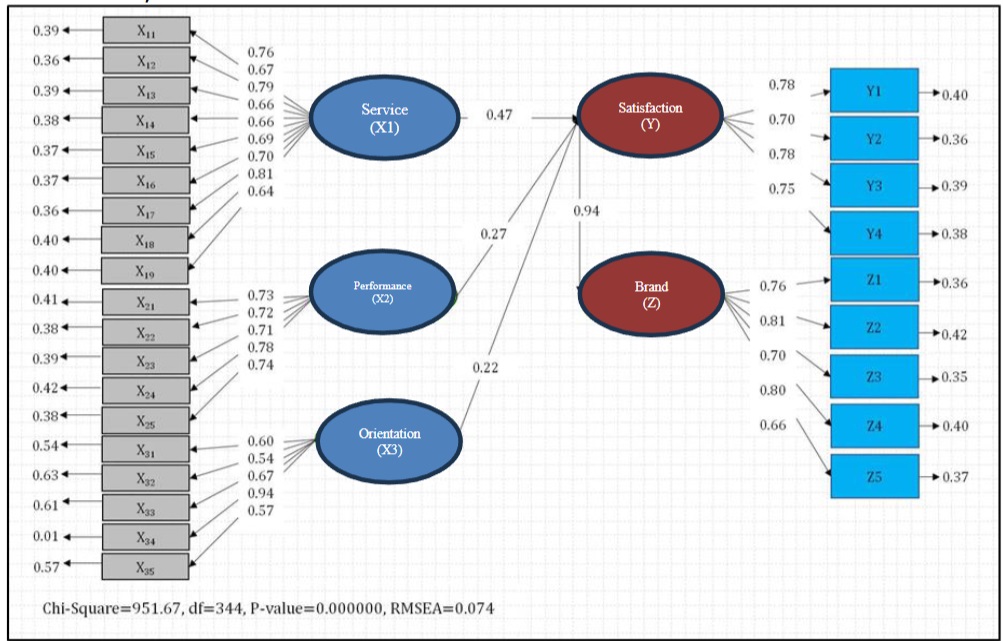
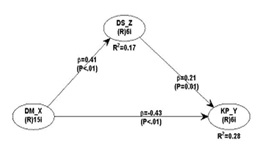
Building projects continue to experience persistent cost overruns, quality inconsistency, and schedule slippage, indicating a lack of integrated managerial mechanisms that translate control practices into sustainable performance outcomes. An integrated monitoring model is empirically tested using SEM–PLS based on survey data from 263 construction practitioners, triangulated with operational project records including Earned Value Management, S-curve analysis, and BIM 4D/5D outputs. The results demonstrate that DES exerts a strong influence on cost and quality performance, COM is the dominant driver of quality stability with indirect cost effects, and SCH is the primary determinant of time performance. The framework contributes by linking managerial control practices to measurable sustainability outcomes, offering a practical project-control architecture particularly relevant for developing-country construction contexts.
Bukhori, Departemen Civil Engineering, Faculty Engineering, Universitas Swadaya Gunung Jati
 holds a Master’s degree in Civil Engineering (M.T.) from Universitas Trisakti, Jakarta (2014). He is a lecturer in Civil Engineering at the Faculty of Engineering, Universitas Swadaya Gunung Jati (UGJ) Cirebon, specializing in Construction Management. His teaching and research interests include construction project performance, risk management, cost–quality–time optimization, and the integration of digital innovation in civil engineering practices. He actively contributes to both academia and industry by promoting research-based education, sustainable infrastructure development, and innovation-driven construction management. Through his academic and professional engagement, he aims to advance engineering excellence and practical knowledge for the next generation of civil engineers.
He can be contacted via email at bukhori@ugj.ac.id or bukhoricrb@gmail.com
Kartono Wibowo, Departemen Civil Engineering, Faculty Engineering, Universitas Islam Sultan Agung
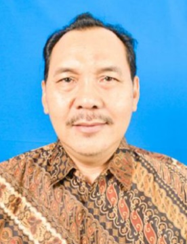 holds a Bachelor of Engineering (B.Eng.) in Civil Engineering, a Master of Management (MM) and a Master of Technology (M.T.) in Construction Management. He currently serves as Dean of the Faculty of Engineering at Universitas Islam Sultan Agung (UNISSULA), Semarang and holds the academic rank of Lektor Kepala. His principal field of expertise lies in Civil Engineering with a specific focus on Construction Management. In his academic role, he teaches key courses including Occupational Health & Safety (K3), Project Cost Estimation and Scheduling, integrating his research interests in job safety analysis, cost & schedule control, and flood management. Dr. Wibowo is widely recognised for his contributions to engineering education and research in Indonesia.He can be contacted at email: kartonowibowo@unissula.ac.id.
Antonius, Departemen Civil Engineering, Faculty Engineering, Universitas Islam Sultan Agung
 holds a Bachelor of Engineering (B.Eng.) in Civil Engineering from Universitas Islam Indonesia (UII), Yogyakarta; a Master of Engineering (M.Eng.) in Civil Engineering – Structural Engineering from Institut Teknologi Bandung (ITB), Bandung; and a Doctor of Engineering (Dr.Eng.) in Civil Engineering – Structural Engineering from ITB, Bandung. He currently serves as Professor of Civil Engineering at the Faculty of Engineering, Universitas Islam Sultan Agung (Unissula), Semarang, specializing in structural engineering and construction technology. His research interests include structural reliability, concrete mechanics, and building performance evaluation. Prof. Antonius was inaugurated as Professor on 2 December 2016. He can be contacted at the Faculty of Engineering, Unissula or via email: antonius@unissula.ac.id
Downloads
[1] M. Deng, C. C. Menassa, and V. R. Kamat, "From BIM to digital twins: A systematic review of the evolution of intelligent building representations in the AEC-FM industry," Journal of information technology in construction, vol. 26, 2021.
[2] M. Mamdouh, O. Moursy, A. Hassan, and V. Gerges, "A comparison between CAD system and building information modelling (BIM)," in IOP Conference Series: Earth and Environmental Science, 2024, vol. 1396, no. 1: IOP Publishing, p. 012037.
[3] H. M. Ayman, S. Y. Mahfouz, and A. Alhady, "Integrated EDM and 4D BIM-based decision support system for construction projects control," Buildings, vol. 12, no. 3, p. 315, 2022.
[4] Z. R. Kamandang, "The Project Performance Evaluation of Road Construction Project Using Earned Value Method," CI-TECH, vol. 3, no. 1, 2022.
[5] H. Alajmani, S. Ahmed, and S. M. El-Sayegh, "Factors causing delays in the UAE construction industry amid the Covid-19 pandemic," Journal of Financial Management of Property and Construction, vol. 29, no. 1, pp. 135-151, 2024.
[6] I. Mustofa, "Application of the Crashing Method in the Construction of District Office Buildings Karangrejo," CIVED, vol. 10, no. 3, pp. 777-786, 2023.
[7] N. A. H. Hadzaman, "Study on quality efficiency for bim-based construction projects," Int. J. Acad. Res. Bus. Soc. Sci, vol. 12, no. 9, pp. 355-364, 2022.
[8] V. Andian and M. Waty, "Factors Of Affecting The Occurrence Of Cost Overruns In Construction Projects During COVID-19 Pandemic," International Journal of Application on Sciences, Technology and Engineering, vol. 1, no. 2, pp. 685-694, 2023.
[9] A. R. Hussein and S. F. Moradinia, "Mitigating time and cost overruns in construction projects: A questionnaire study on integrating earned value management and risk management," Journal of Studies in Science and Engineering, vol. 3, no. 2, pp. 37-51, 2023.
[10] M. R. I. Baihaqqy, "Decision Analysis Trading Foreign Exchange Berbasis Signaling Theory," Jurnal Manajemen Industri dan Logistik, vol. 6, no. 2, pp. 212-221 %@ 2598-5795, 2022.
[11] C. P. Ogbu and R. Ehigiator-Irughe, "Cost over-run in civil works: a case-study of engineering, procurement and construction (EPC) gas depot construction projects in Nigeria," European Journal of Environment and Earth Sciences, vol. 1, no. 4, 2020.
[12] X. Yin, "Research on Collaborative Management of BIM (Building Information Modeling) in Engineering Projects," ADVANCES IN ECONOMICS, MANAGEMENT AND POLITICAL SCIENCES Учредители: Eliwise Academy Ltd, vol. 115, no. 1, pp. 35-41, 2024.
[13] T. Y. M. Zagloel, M. T. Siregar, A. Hidayatno, and A. D. Setiawan, "Development of sustainable logistics performance model using system dynamics in urban logistics service companies in Indonesia," Cogent Business & Management, vol. 11, no. 1, p. 2286684, 2024.
[14] S. A. Noviani, M. Amin, and S. H. Hardjomuldjadi, "The impact of 3D, 4D, and 5D Building Information Modeling for reducing claims to service providers," Sinergi, vol. 26, no. 1, pp. 47-56, 2022.
[15] C. P. Hudoyo, I. Rustendi, and I. Handayani, "Risk Analysis of Pemalang District Road and Bridge Construction Delays," Applied Research on Civil Engineering and Environment (ARCEE), vol. 4, no. 02, pp. 84-94, 2023.
[16] H. Zahoor, R. M. Khan, A. Nawaz, M. Ayaz, and A. Maqsoom, "Project control and forecast assessment of building projects in Pakistan using earned value management," Engineering, Construction and Architectural Management, vol. 29, no. 2, pp. 842-869, 2022.
[17] E. Alenazi, Z. Adamu, and A. Al-Otaibi, "Exploring the nature and impact of client-related delays on contemporary Saudi construction projects," Buildings, vol. 12, no. 7, p. 880, 2022.
[18] K. Wicaksono, J. Soetjipto, and G. Halik, "Prediction Of Project Schedule Performance Index for Trans South Java Road Project Lot 7 Blitar Regency Using Bayesian Network," UKaRsT, vol. 7, no. 1, pp. 46-59, 2023.
[19] A. R. Hussein and S. F. Moradinia, "Time and Cost Management in Water Resources Projects Utilizing the Earned Value Method," Journal of Studies in Science and Engineering, vol. 4, no. 1, pp. 91-111, 2024.
[20] N. Abdul Rahim, S. Syed Zakaria, N. Ishak, and F. Ibrahim, "Building Information Modeling (BIM) application towards environmental sustainability," in IOP Conference Series: Earth and Environmental Science, 2024, vol. 1369, no. 1: IOP Publishing, p. 012001.
[21] F. M. M. Nasser, N. A. Alawi, A. Mustaffa, A. Yusuf, A. A.-A. Al-Refaei, and M. F. M. Mohammed, "Matching of the project manager’s approach and the project delivery system to achieve project success in yemeni projects," European Journal of Business and Management Research, vol. 9, no. 3, pp. 101-109, 2024.
[22] Z. Zhang, L. Ma, and N. Nisbet, "Unpacking ambiguity in building requirements to support automated compliance checking," Journal of Management in Engineering, vol. 39, no. 5, p. 04023033, 2023.
[23] A. A. Alnaser, N. M. Alsanabani, and K. S. Al-Gahtani, "BIM impact on construction project time using system dynamics in Saudi Arabia’s construction," Buildings, vol. 13, no. 9, p. 2267, 2023.
[24] F. Susilowati and W. Kurniaji, "Effective performance evaluation to estimate cost and time using earned value," in IOP conference series: Materials science and engineering, 2020, vol. 771, no. 1: IOP Publishing, p. 012055.
[25] A. Rauzana, A. Zahrah, and W. Dharma, "Critical delay factors for construction projects in Central Aceh District, Indonesia," F1000Research, vol. 11, p. 474, 2022.
[26] M. Gharbia et al., "Building code compliance for off-site construction," Journal of Legal Affairs and Dispute Resolution in Engineering and Construction, vol. 15, no. 2, p. 04522056, 2023.
Copyright (c) 2026 Bukhori, Kartono Wibowo, Antonius

This work is licensed under a Creative Commons Attribution 4.0 International License.
JMIL Jurnal Manajemen Industri dan Logistik (Journal of Industrial and Logistics Management) is an Open Access Journal. The authors who publish the manuscript in JMIL Jurnal Manajemen Industri dan Logistik agree to the following terms:

JMIL Jurnal Manajemen Industri dan Logistik is licensed under a Creative Commons Attribution 4.0 International License. This permits anyone to copy, redistribute, remix, transmit and adapt the work provided the original work and source is appropriately cited.
This means:
(1) Under the CC-BY license, authors retain ownership of the copyright for their article, but authors grant others permission to use the content of publications in JMIL Jurnal Manajemen Industri dan Logistik in whole or in part provided that the original work is properly cited. Users (redistributors) of JMIL Jurnal Manajemen Industri dan Logistik are required to cite the original source, including the author's names, JMIL Jurnal Manajemen Industri dan Logistik as the initial source of publication, year of publication, volume number, issue, and Digital Object Identifier (DOI); (2) Authors grant JMIL Jurnal Manajemen Industri dan Logistik the right of first publication. Although authors remain the copyright owner.