Determinants of Parcel Locker Adoption in Last-Mile Delivery with Emphasis on Logistics Value, Consumer Orientation, Value Co-Creation, and Green Awareness

Downloads
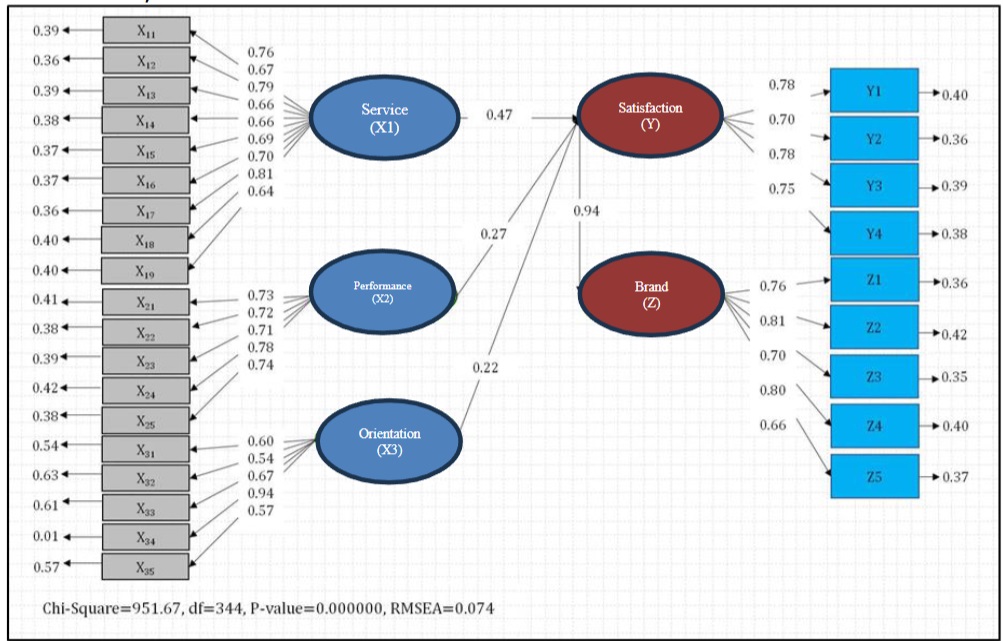
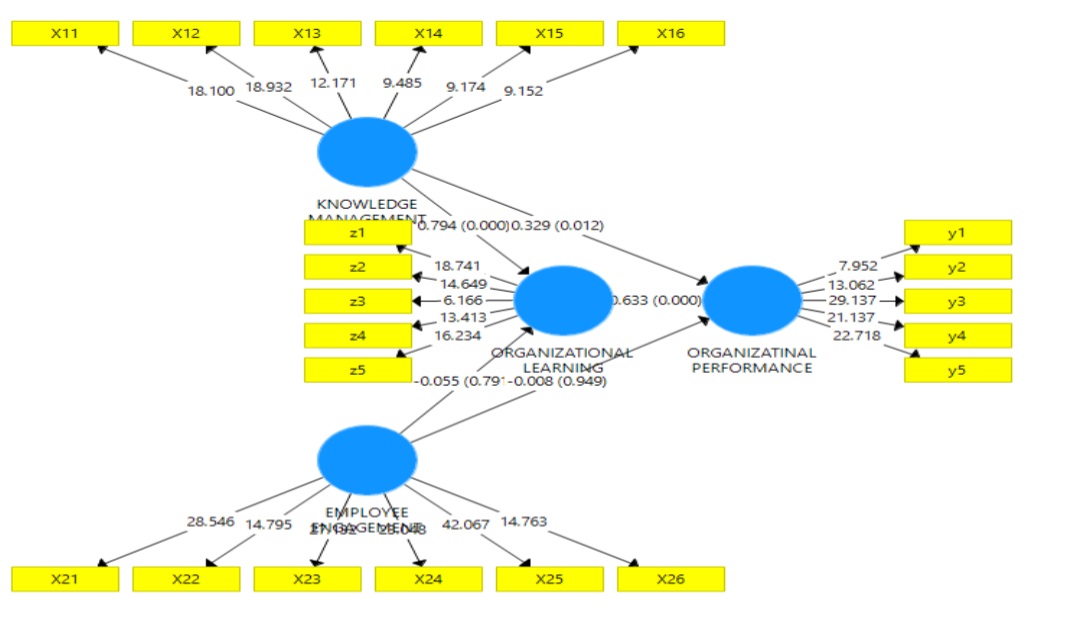
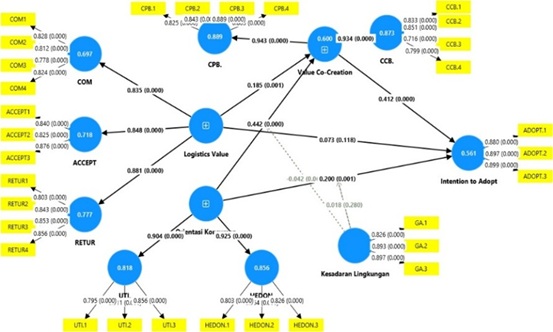
This study aims to identify the key factors that influence consumers' intention to adopt parcel locker services in last-mile delivery, using Service-Dominant Logic to explain how value is created between consumers and service providers. The research was conducted in Jakarta using a quantitative approach. Data were collected from 412 e-commerce users through a structured survey using stratified random sampling across five administrative cities. The Data were analyzed using Partial Least Squares Structural Equation Modeling (PLS-SEM) with appropriate statistical software. The study concludes that consumer adoption of parcel lockers depends more on collaborative experiences and personalized interactions than on environmental concerns. Value Co-Creation plays a central role as the main pathway driving adoption.
Downloads
[1] A. Seghezzi, R. Mangiaracina, A. Tumino, and A. Perego, "‘Pony express’ crowdsourcing logistics for last-mile delivery in B2C e-commerce: an economic analysis," International Journal of Logistics Research and Applications, vol. 24, no. 5, pp. 456-472, 2021.
[2] A. F. Vilardi, "Consumer's point of view on parcel lockers in DKI Jakarta," in MATEC web of conferences, 2019, vol. 270: EDP Sciences, p. 03003.
[3] A. Kawa and J. Światowiec-Szczepańska, "Logistics as a value in e-commerce and its influence on satisfaction in industries: a multilevel analysis," Journal of Business & Industrial Marketing, vol. 36, no. 13, pp. 220-235, 2021.
[4] J. Castanha, M. Prabhu, S. K. B. Pillai, I. Indrawatı, and T. D. Pimentel, "Behavior intention to adopt IRCTC application for railway ticket reservation service: A case study of Goan consumers," Journal of multidisciplinary academic tourism, vol. 7, no. 2, pp. 19-30, 2022.
[5] N. T. Ha, M. Akbari, and B. Au, "Last mile delivery in logistics and supply chain management: a bibliometric analysis and future directions," Benchmarking: An International Journal, vol. 30, no. 4, pp. 1137-1170, 2023.
[6] R. Anissa, "Supply chain management sustainability through the performance improvement of mts-mto production system typology," Jurnal Manajemen Industri dan Logistik, vol. 1, no. 1, pp. 27-42 %@ 2598-5795, 2017.
[7] M. Cebeci, M. De Bok, and L. Tavasszy, "The changing role and behaviour of consumers in last mile logistics services: A review," Journal of Supply Chain Management Science, vol. 4, no. 3-4, pp. 114-138, 2023.
[8] J. Monios, L. Budd, and S. Ison, The Routledge handbook of urban logistics. Taylor & Francis, 2023.
[9] P. Siegfried, "Developing a sustainable concept for the urban lastmile delivery," 2021.
[10] F. Pramita, M. Taufik, J. Jumailah, I. Ikal, and G. Subroto, "The significance of environmental awareness for protecting nature and cherishing the earth," in BIO Web of Conferences, 2023, vol. 79: EDP Sciences, p. 01001.
[11] D. S. Davé, M. J. Dotson, and J. E. Stoddard, "Consumer awareness of supply chain flows in relation to consumer perceptions of value-added by supply chain management," International Journal of Logistics Systems and Management, vol. 31, no. 3, pp. 387-401, 2018.
[12] Y. Deutsch and B. Golany, "A parcel locker network as a solution to the logistics last mile problem," International journal of production research, vol. 56, no. 1-2, pp. 251-261, 2018.
[13] E. A. Elliot, R. Adams, and E. K. K. Tsetse, "Customer value co-creation: Environmental sustainability as a tourist experience," Sustainability, vol. 15, no. 13, p. 10486, 2023.
[14] A. Buerklen, I. Adeniran, and C. Kehrt, "A simulative assessment of collaborative last mile delivery solutions," Transportation Research Procedia, vol. 82, pp. 3925-3942, 2025.
[15] M. Mucowska, "Trends of environmentally sustainable solutions of urban last-mile deliveries on the e-commerce market—a literature review," Sustainability, vol. 13, no. 11, p. 5894, 2021.
[16] F. Bruzzone, F. Cavallaro, and S. Nocera, "The integration of passenger and freight transport for first-last mile operations," Transport policy, vol. 100, pp. 31-48, 2021.
[17] H.-T. Yi, C. Yeo, F. E. Amenuvor, and H. Boateng, "Examining the relationship between customer bonding, customer participation, and customer satisfaction," Journal of Retailing and Consumer Services, vol. 62, p. 102598, 2021.
[18] C. Nagadeepa, B. Dyczek, A. K. Mishra, B. Valerii, O. Oleksandr, and K. Sokoliuk, "Last-mile delivery innovations: The future of e-commerce logistics," in Technology-Driven Business Innovation: Unleashing the Digital Advantage, Volume 1: Springer, 2024, pp. 283-296.
[19] Y. E. Tri, A. Kusumawati, and U. Nimran, "The influence of utilitarian Value, hedonic Value, Social Value, and perceived risk on customer satisfaction: Survey of e-commerce customers in Indonesia," Verslas: Teorija ir Praktika, vol. 21, no. 2, p. 613, 2020.
[20] M. T. Siregar and G. Y. Samodra, "Analysis of Service Delivery Improvement of Manufactured Products with Lean Method Management," Journal of Management Science & Engineering research, vol. 3, no. 2, pp. 26-30, 2020.
[21] M. A. M. Bonilla, M. Bouzon, and C. C. Peña-Montoya, "Taxonomy of key practices for a sustainable Last-Mile logistics network in E-Retail: A comprehensive literature review," Cleaner Logistics and Supply Chain, vol. 11, p. 100149, 2024.
[22] S. Praet and D. Martens, "Efficient parcel delivery by predicting customers’ locations," Decision Sciences, vol. 51, no. 5, pp. 1202-1231, 2020.
[23] S. M. Mehmood and A. Najmi, "Understanding the impact of service convenience on customer satisfaction in home delivery: Evidence from Pakistan," International Journal of Electronic Customer Relationship Management, vol. 11, no. 1, pp. 23-43, 2017.
[24] A. C. Gomes et al., "Logistics management in e-commerce: challenges and opportunities," Revista de Gestão e Secretariado, vol. 14, no. 5, pp. 7252-7272, 2023.
[25] M. Dissauer, B. Einspieler, N. Krauser, S. Schartner, and M. Woschank, "Parcel Lockers as a Logistic Concept: A Systematic Review of Implementation Strategies and Outcomes," in Proceedings of the International Conference on Industrial Engineering and Operations Management, Johannesburg/Pretoria, South Africa, 2024, pp. 23-25.
[26] Y. Farida, N. Siswanto, and I. Vanany, "Reverse logistics toward a circular economy: Consumer behavioral intention toward polyethylene terephthalate (PET) recycling in Indonesia," Case Studies in Chemical and Environmental Engineering, vol. 10, p. 100807, 2024.
[27] J. F. Hair, G. T. M. Hult, C. M. Ringle, M. Sarstedt, N. P. Danks, and S. Ray, Partial least squares structural equation modeling (PLS-SEM) using R: A workbook. Springer, 2021.
[28] S. B. Butar, N. Ambarita, and R. Haniva, "Green awareness and green product: A direction for sustainable consumption," Applied Environmental Science, vol. 1, no. 2, 2024.
Copyright (c) 2026 Lis Lesmini, Prasadja Ricardianto, Nofrisel, Yana Tatiana, Edi Abdurachman

This work is licensed under a Creative Commons Attribution 4.0 International License.
JMIL Jurnal Manajemen Industri dan Logistik (Journal of Industrial and Logistics Management) is an Open Access Journal. The authors who publish the manuscript in JMIL Jurnal Manajemen Industri dan Logistik agree to the following terms:

JMIL Jurnal Manajemen Industri dan Logistik is licensed under a Creative Commons Attribution 4.0 International License. This permits anyone to copy, redistribute, remix, transmit and adapt the work provided the original work and source is appropriately cited.
This means:
(1) Under the CC-BY license, authors retain ownership of the copyright for their article, but authors grant others permission to use the content of publications in JMIL Jurnal Manajemen Industri dan Logistik in whole or in part provided that the original work is properly cited. Users (redistributors) of JMIL Jurnal Manajemen Industri dan Logistik are required to cite the original source, including the author's names, JMIL Jurnal Manajemen Industri dan Logistik as the initial source of publication, year of publication, volume number, issue, and Digital Object Identifier (DOI); (2) Authors grant JMIL Jurnal Manajemen Industri dan Logistik the right of first publication. Although authors remain the copyright owner.